Skip to content

Federal Solar Tax Credit Explained

mm Marcus Rivera 9 min read

Understanding the Federal Solar Credit

Key Takeaways

  • The Residential Clean Energy Credit offers 30% back for qualified solar systems placed in service from 2022 through 2032.

  • The credit is nonrefundable but unused amounts can carry forward to future tax years if your liability is too small.

  • There is no annual or lifetime dollar cap for solar electric property under this federal incentive program.

  • Battery storage with at least 3 kilowatt-hours of capacity now qualifies for the credit starting in 2023.

  • Qualified costs include panels, inverters, racking, wiring, and installation labor—but not conventional roofing materials or structural support.

  • You claim the credit on IRS Form 5695 filed with your federal return for the year the system is placed in service.

How the Credit Works

The most common confusion is people treating the federal solar tax credit like a check that shows up right after install. That's not how it works. If your system is placed in service in 2026, you claim the credit on your 2026 federal income tax return, which most households file in 2027.

If your tax liability is smaller than the credit you've earned, the unused amount can carry forward, but you're still working within your own tax situation. That's why it's worth doing a quick reality check before you sign: look at last year's total tax on your Form 1040, then think about whether you'll likely owe a similar amount this year.

For a typical rooftop photovoltaic project, the credit generally covers solar panels or modules, inverters including microinverters, racking, wiring, and the labor costs for onsite preparation and installation. It can also cover certain related costs like piping or wiring needed to connect the equipment to the home.

What doesn't count is just as important: traditional roofing materials or structural components that merely support the array usually do not qualify. If you're replacing an aging roof at the same time, it's smart to ask the installer to separate the solar scope from the roofing scope in the contract so your documentation is clean.

Battery storage is a major update many homeowners still miss. Starting in 2023, the Residential Clean Energy Credit includes qualified battery storage technology, and the IRS guidance has emphasized a minimum capacity threshold of at least 3 kilowatt-hours or 3 kWh.

Practically, this means a home battery installed in 2026 can qualify even if it's added later than the panels, as long as it meets the requirements and is placed in service that year. If your utility has time-of-use rates, a battery can also change the savings math sometimes dramatically so it's worth asking for an estimate that models your rate plan.

Where solar rebates and local programs intersect with the federal credit is where people accidentally overstate their savings. In general, purchase-price adjustments especially certain public utility subsidies for buying or installing clean energy property are subtracted from your qualified expenses before you calculate the credit.

On the other hand, payments or credits tied to electricity you send back to the grid like net metering credits don't reduce your qualified project cost for the federal calculation. State and local programs can be messy because they're often labeled rebates even when they don't function as a purchase-price adjustment under federal tax rules.

Real-World Pricing Context

Average system costs in 2026 and what your federal credit could look like

Understanding Today's Installation Costs

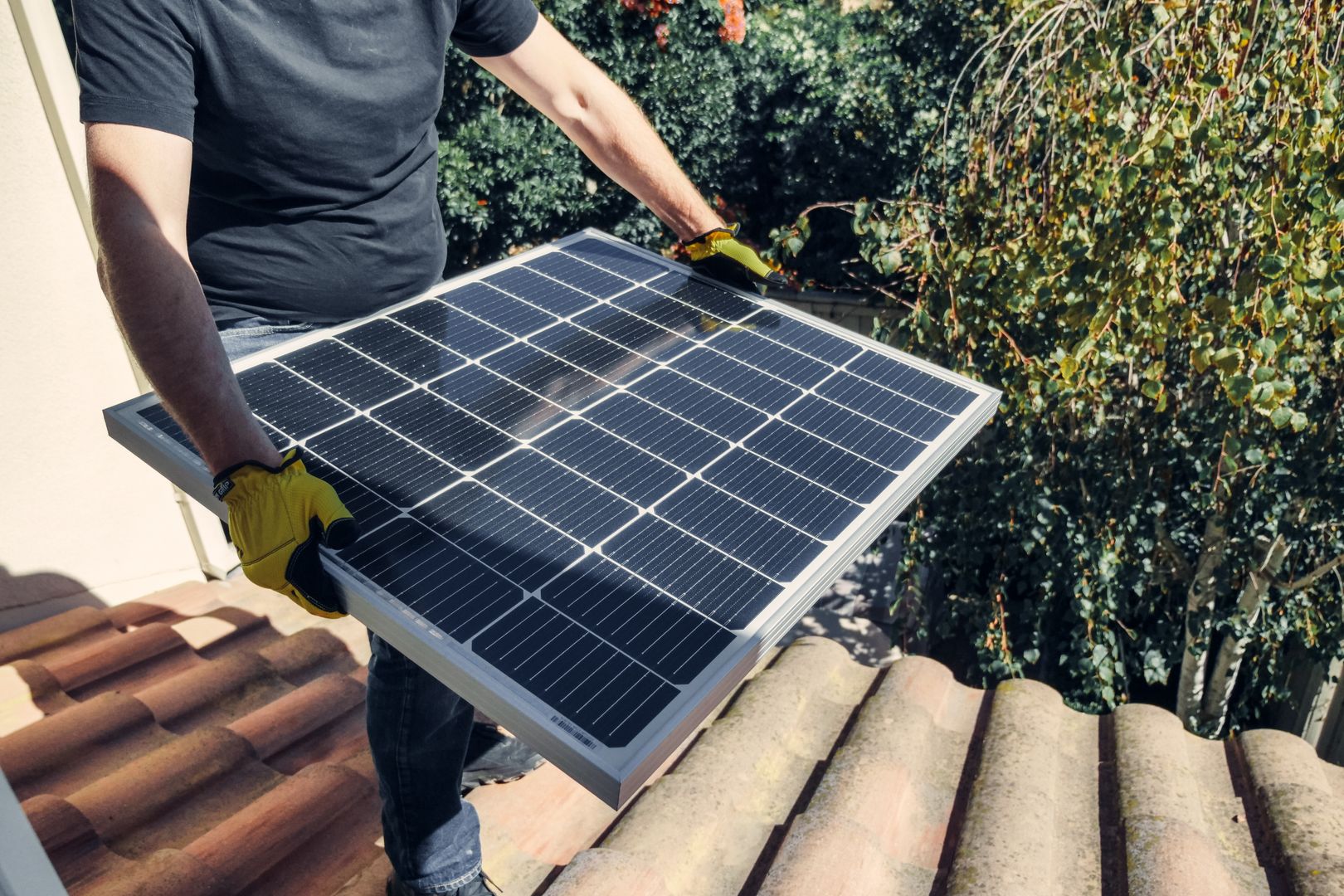
Solar panels on residential roof with battery system
Rooftop solar panels paired with battery storage can maximize federal tax credit benefits and time-of-use savings.

Eligible Costs Checklist

  • Solar panels or modules
  • Inverters including microinverters
  • Racking and mounting hardware
  • Wiring and electrical connections
  • Onsite preparation and installation labor
  • Battery storage with 3+ kWh capacity
  • Piping or wiring for equipment connection
  • Permitting and interconnection fees

Claiming the Credit

A step-by-step workflow to avoid surprises at tax time

Step-by-Step Filing Process

Claiming the residential solar tax credit isn't difficult, but the order of operations matters. A clean, homeowner-friendly workflow looks like this: first, confirm you'll own the system via cash purchase or loan rather than leasing it, because the credit generally goes to the system owner.

Second, insist on an itemized contract that separates solar equipment, eligible labor, battery storage if any, and non-qualifying work like conventional roofing. Third, track incentives you receive especially anything from a utility because some amounts may need to be subtracted from qualified costs.

Fourth, keep proof of the placed-in-service date typically a final inspection or permission-to-operate approval, depending on your area. Fifth, file IRS Form 5695 with your federal return for the year the system was installed and operating, then carry forward any unused portion if your tax liability was too small.

A few edge cases are worth flagging before you get surprised at tax time. If you own a second home you live in part-time and don't rent out, it can qualify for solar electric property under the residential clean energy framework, but fuel cell credits have tighter location rules.

If you're a landlord who doesn't live in the home, you generally can't claim the residential credit for that property under the individual homeowner rules. If you use part of your home for business, the credit can be limited based on the share allocable to nonbusiness use once business use rises above certain thresholds.

And if you finance the system, note that interest and loan origination fees are not included in qualified costs for the credit calculation; the eligible amount is generally the installed cost of the equipment and qualifying labor, not the cost of borrowing.

The safest approach is to keep every incentive document you receive and, if the dollars are meaningful, confirm how your specific incentive should be treated before you file. State and local programs are often labeled rebates even when they don't function as a purchase-price adjustment under federal tax rules.

Treat the credit as a predictable percentage benefit 30% for most 2026 installs under current law, pair it with any legitimate solar rebates you qualify for, and then pressure-test the remaining out-of-pocket cost against your roof's production potential and your utility's billing rules.


System Costs by Size

5 kW system $2.78/W average before incentives $13,900
7 kW system $2.62/W average before incentives $18,340
8 kW system $2.62/W average before incentives $20,960
12 kW system $2.56/W average before incentives $30,720
Permitting fees of total installation cost ~8%
Tree trimming for shade mitigation if needed $300–$1,500

Pricing from EnergySage 2026 marketplace data; actual costs vary by location and project specifics.

High angle view of urban rooftop featuring solar panels and greenery.

The roof itself is the other half of the financial story, because performance drives payback. People ask for the best angle for solar panels as if there's one universal number, but the real answer is the best angle that fits your roof, your sun exposure, and your economics. As a rule of thumb for fixed mounts, many solar design resources use a tilt roughly equal to your latitude as a starting point for annual energy production, then adjust for roof constraints, wind, snow shedding, and aesthetics. Orientation matters too: in most U.S. locations, a south-facing roof plane is the easiest path to high annual output, but east- and west-facing arrays can still be excellent when they better match how you use electricity, for example late-afternoon cooling loads.

Honest Downsides to Consider

Solar incentives can tempt people into rushing—know the limitations before you sign

When the Credit Isn't Enough