Skip to content

Solar Panel Cost Guide

mm David Thompson 10 min read

Understanding Solar Installation Costs

Six Key Takeaways

  • A typical 12 kW rooftop system is often priced around $31,135 before incentives.

  • Recent national quote averages work out to about $2.60 per watt before incentives.

  • Solar panels themselves are a small slice of the total installed price.

  • Your roof layout and shading can raise costs by forcing more complex designs.

  • Comparing at least three solar panel quotes is where real savings appear.

  • Incentives are local now; don't assume a federal credit applies in 2026.

What Makes a Good Price

A good price is not just the lowest total. It's the lowest cost per watt for comparable equipment, workmanship, and warranty coverage, with an honest production model. Cost per watt is simply total system price divided by system size in watts.

This metric lets you compare a 7.2 kW quote to a 12 kW quote without getting fooled by the bigger number. In many markets, larger systems come in at a lower dollar per watt because design and permitting overhead don't scale linearly.

To put real numbers on the table, national marketplace data in 2026 shows an average 12 kW system price of $31,135 before incentives, with a low-end around $27,526 and a high-end around $33,869.

On a per-watt basis, systems average about $2.60 per watt before incentives, but state averages can be meaningfully higher or lower. Your neighborhood, installer mix, and quote-shopping habits can change your result more than the panel brand does.

One reason it pays to ground your expectations in current data is that a reputable benchmark for median cash-purchase pricing in 2024 was about $3.50 per watt, nearly a dollar per watt higher than the average quoted price in some online marketplaces.

Where Your Dollars Go

A concrete breakdown for a typical 12 kW system

Equipment and Soft Costs

Cost Breakdown

Solar panels Equipment $3,736
Solar inverters Power conversion $3,114
Racking equipment Roof attachment $934
Electrical wiring Balance of system $2,802
Installation labor Field work $2,179
Permitting Paperwork and utility coordination $2,491
Sales & marketing Customer acquisition $5,604
Overhead costs Operations $3,425
Total $31,135

Example 12 kW system before incentives

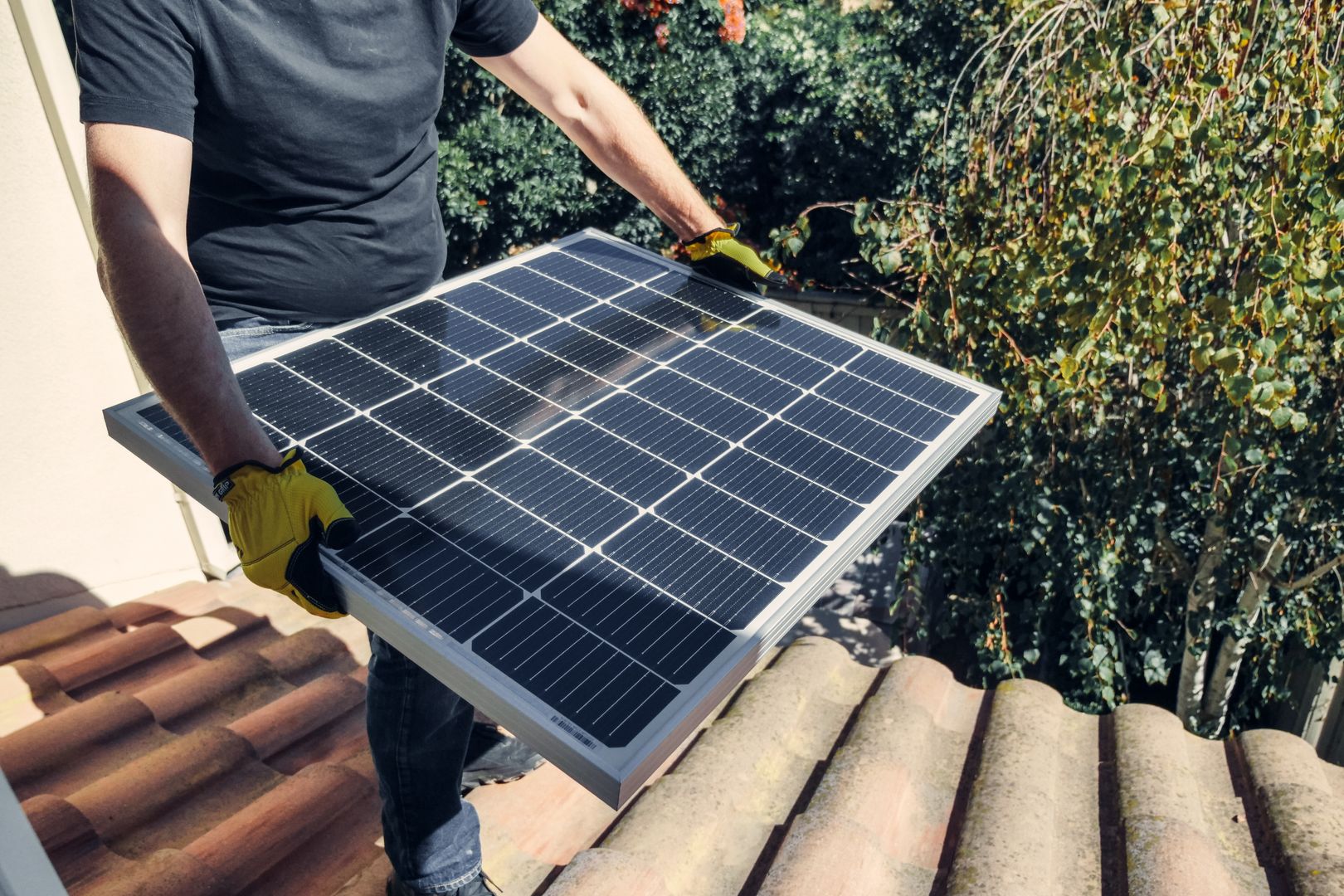
Solar panels on residential shingle roof
Rooftop solar array on a south-facing shingle roof demonstrates typical residential installation design.

Quote Process Steps

  • Gather last 12 months of kWh usage and roof photos
  • Set a target offset percentage for your usage
  • Collect apples-to-apples quotes with clear equipment lists
  • Normalize pricing by comparing cost per watt
  • Pressure-test assumptions about buyback rates and warranties

Equipment Choices That Matter

How panels, inverters, and roof design affect performance and price

Panels and Inverters

Equipment choices still matter, but usually through performance and design flexibility more than upfront dollars. In recent quote data, about 97% of solar panels offered to homeowners fall in the 400 to 460 watt range per panel.

That's why you'll often see 18 to 30 panels on a typical home depending on your target offset and roof area. Higher-wattage panels can reduce panel count and sometimes simplify racking and wiring, but the better question is whether the chosen panel fits your roof geometry.

Inverters are a common hidden lever in both price and performance. String inverters are typically the lowest-cost route when you have a single, unshaded roof plane. Microinverters and DC-optimized systems can cost a few thousand dollars more.

They can be worth it when the roof is chopped up into multiple planes, has partial shading, or you want panel-level monitoring. When you compare solar panel quotes, ask each installer to explain why the inverter approach fits your roof.

Roof design and solar panel angle orientation can quietly swing your economics. In most of the U.S., arrays facing close to true south generally maximize annual production, but east and west-facing roofs can still make excellent financial sense.

Tilt is similar: the perfect tilt depends on latitude and whether you care more about summer or winter output, but in practice many successful residential systems are mounted flush to the roof pitch.

The bigger red flags are shading from trees, chimneys, dormers and a roof that's near end-of-life. If you might need a roof replacement in the next decade, it's often cheaper to do it before solar to avoid paying for a remove-and-reinstall later.


Flat lay of tax forms, calendar, and glasses for 2021 financial planning.

The incentive landscape is one of the biggest sources of confusion in 2026, and it directly affects your payback math. Under changes tied to Public Law 119-21, the federal Residential Clean Energy Credit was accelerated to end after December 31, 2025 for new expenditures. If your system wasn't placed in service by the end of 2025, you generally shouldn't assume there's a federal tax credit available for a 2026 installation.

Financing Options

Cash, Loan, or Lease

Financing is where many affordable systems become quietly expensive. The right choice depends on your risk tolerance and how long you plan to stay in the home.

Cash Purchase

A cash purchase is usually the cleanest ROI picture. You pay once, your utility bill drops, and you avoid loan fees and interest. This route gives you full ownership of the system, all tax incentives if available, and the simplest resale story. It requires significant upfront capital but maximizes long-term savings and eliminates monthly financing costs that can erode your economics over 20 years.

Solar Loan

A solar loan can still work well when the monthly payment is comfortably below your current electric spend, but you need to look for dealer fees, term length, and whether the payment structure depends on a tax credit that no longer exists for 2026 installs. Loans spread the cost over time and may preserve liquidity, but interest and origination fees add to total cost. Compare effective APR and total interest paid across loan terms to understand true cost.

Lease or PPA

Leases and power purchase agreements can deliver low or even zero-down entry, but you're trading away some upside and adding contract complexity in exchange for convenience. The installer owns the system, handles maintenance, and captures incentives. Your savings are typically smaller than with ownership, and selling your home with a lease transfer can complicate the process. Best for homeowners who want hassle-free solar without upfront cost.