Skip to content

Best Solar Batteries for Home

mm Marcus Rivera 12 min read

Choosing the Right Solar Battery for Your Home

Reviewed by Marcus Rivera Updated

Best Batteries at a Glance

  • Best Overall Tesla Powerwall 3 High power delivery for starting loads, integrated solar inverter, strong app experience, and broad installer availability
  • Best Whole-Home Scalability FranklinWH aPower 2 15 kWh usable capacity per unit, 10 kW continuous output, 15-year warranty, and excellent for larger loads during outages
  • Best Modular Choice Enphase IQ Battery 5P Tight integration with Enphase microinverters, incremental expansion in 5 kWh steps, LFP chemistry, 15-year warranty
  • Best High Capacity Generac PWRcell 2 Modular cabinet design scales to 36 kWh, strong power for big loads, and extended backup duration for larger homes

Key Takeaways

  • Match battery capacity in kWh to how long you want to run loads, and power output in kW to what you need running at once

  • Backup power keeps essentials running during outages; bill management shifts energy use to save on time-of-use rates

  • LFP chemistry offers thermal stability and long cycle life; NMC remains compact and proven but may have different thermal characteristics

  • The federal 30% residential clean energy credit ended December 31, 2025; state and utility incentives still exist in 2026

  • Installed cost includes battery hardware, gateway/backup switch, load management, electrical work, permitting, and commissioning

  • Read warranties carefully: compare term length, capacity retention percentage, and any throughput limits

What Makes a Battery Right for Your Home

A home battery does two jobs, and you should be clear about which one you're buying. Backup power is about keeping lights, refrigeration, internet, medical devices, and maybe HVAC running when the grid goes down. Bill management is about shifting when you buy from or export to the grid—charging when energy is cheap or solar is abundant, then discharging when rates spike. The right battery is often less about brand loyalty and more about matching three numbers to your home: how many kilowatt-hours you want to store, how many kilowatts you need at once, and how long you want that performance to remain under warranty.

If you're trying to compare these batteries on the same yardstick, use the same criteria across every quote you receive. First, compare usable capacity in kWh, because that determines how long you can run loads. Next, compare continuous power in kW, because that determines what you can run at the same time—especially for motor starts and HVAC. Then look at chemistry. In 2026, LFP is popular for its thermal stability and long cycle-friendly behavior, while NMC remains common and can be very compact and proven, but may carry different thermal management and safety characteristics depending on product design.

Finally, read the warranty like a homeowner, not like a marketer: term length such as 10 versus 15 years, capacity retention often 70 percent at the end, and whether there's a throughput limit, meaning how much total energy can be pushed through the battery during the warranty period. These three dimensions—capacity, power, and warranty—are the foundation of any honest battery comparison.

Battery selection also ties back to roof requirements for solar, because solar-plus-storage is only as good as the production feeding it. A battery can be installed without solar, but when your goal is backup plus bill control, pairing storage with a well-designed PV array gives you options during multi-day outages and can reduce how often you cycle the battery from the grid. Roof basics that affect both performance and cost are straightforward: you need a roof with enough remaining life that you won't be forced to remove panels in a few years; enough unshaded area for the array size your usage demands; and a structure that can handle the additional load while meeting local fire setback and access rules.

The hidden roof requirement is wiring and layout: complicated roof planes, long conduit runs, or limited attic access can raise labor costs, even if the roof looks perfect from the street. Understanding these basics before you shop for batteries helps you avoid the common mistake of buying capacity without buying power, backing up too much without load management, ignoring temperature environment, or assuming every incentive applies to every battery.

Tesla Powerwall 3 battery system residential installation
Tesla Powerwall 3 installed in a residential garage with integrated solar inverter and backup gateway

Top Five Home Battery Systems for 2026

Ranked picks based on real-world performance, scalability, and homeowner value

Our Top Battery Picks

These five systems represent the best options for most homeowners in 2026, ranked by overall value and versatility

Tesla Powerwall 3

Tesla Powerwall 3

Best Overall

Powerwall 3 is rated at 13.5 kWh nominal battery energy and supports up to 11.5 kW nominal AC output power with an integrated solar inverter for clean, modern installs

4.7/5
  • High power delivery for starting loads
  • clean integration for new installs
  • broad installer availability
  • strong app experience
  • ten-year warranty
  • Physically heavy and not cheap
  • design choices for load management matter as much as the battery itself
FranklinWH aPower 2

FranklinWH aPower 2

Best Scalability

AC-coupled LFP system with 15 kWh usable energy per unit, 10 kW continuous output, 15-year warranty, and excellent scalability for whole-home designs

4.6/5
  • Excellent continuous power for its class
  • long warranty term
  • strong scalability for large homes
  • good fit for running HVAC and well pumps during outages
  • Typically requires more involved energy management design
  • availability and installer familiarity can vary by region
Enphase IQ Battery 5P

Enphase IQ Battery 5P

Best Modular

5.0 kWh usable AC-coupled battery with 3.84 kW continuous power and LFP chemistry, supported by a 15-year limited warranty

4.5/5
  • Excellent for incremental builds
  • tight integration with Enphase controls
  • LFP chemistry for safety-minded buyers
  • modular expansion
  • long warranty
  • 5 kWh per unit means you may need multiple units for longer outage coverage
  • system design must address surge loads
Generac PWRcell 2

Generac PWRcell 2

Best Capacity

Modular cabinet approach with 9 to 18 kWh usable energy per cabinet, scaling to 36 kWh with two cabinets, and up to 11.5 kW continuous power

4.4/5
  • High total capacity potential
  • strong power for big loads when configured correctly
  • fits longer backup duration needs
  • ten-year warranty
  • More complex system requiring careful installer design and commissioning
  • roundtrip efficiency is 88 percent
SolarEdge Home Battery

SolarEdge Home Battery

Best Ecosystem Fit

9.7 kWh storage per battery with 5 kW continuous power and 7.5 kW peak, stacking up to three batteries per inverter for SolarEdge systems

4.3/5
  • Tight ecosystem fit for SolarEdge homes
  • straightforward expansion within SolarEdge designs
  • useful for TOU shifting plus backup
  • Requires commitment to SolarEdge-centered architecture
  • best results come when entire system is designed as one package

Understanding Battery Costs in 2026

Now the money part—because solar battery cost is where a lot of projects either become rational or start turning into emotional purchases. In 2026, EnergySage reports that a 13.5 kWh battery—the capacity of a Tesla Powerwall 3—costs about $15,228 before state or local incentives, based on thousands of quotes. That's a useful benchmark, but it's not the whole installed picture for your home, because the hardware price is only one slice of solar battery storage cost.

A realistic installed budget usually breaks out like this: the battery units themselves; required gateway, backup switch, or backup interface hardware; load management such as smart breakers, subpanel, or a critical loads panel; electrical work including new breakers, conduit, wiring runs, and sometimes a main panel upgrade; permitting and inspection fees; and commissioning time for setup and utility interconnection steps. If you want a simple way to sanity-check quotes, ask your installer to separate equipment cost from labor and electrical upgrades—and to explain what, specifically, is being backed up.

Two policy notes matter in July 2026. First, the federal Residential Clean Energy Credit under Internal Revenue Code section 25D was terminated for expenditures made after December 31, 2025, under Public Law 119–21 signed July 4, 2025. Practically, that means a new solar-plus-storage project you pay for in 2026 generally should not be priced assuming a federal 30 percent credit for homeowners. If you incurred qualifying expenditures in tax year 2025 and your system was installed in a way that qualifies under the IRS timing rules, you may still be able to claim the credit on your 2025 return—talk to a tax professional, because timing details can be decisive.

Second, many state, utility, and local incentives still exist in 2026, and they often matter more now that the federal credit has ended for new expenditures. Those programs can be rebates, performance payments, or utility programs that compensate battery owners for supporting the grid during peak events. The most financially confident approach in 2026 is to treat storage like a home infrastructure decision, not a gadget purchase. Start with what you need to keep running, then choose the smallest system that reliably does that job, and only then add capacity if the economics or your outage history justify it.

For many homes, that means one high-power battery and disciplined load management beats two batteries installed without a clear plan. Common mistakes I see in the field are predictable—and expensive. The first is buying capacity without buying power: a battery bank might have plenty of kWh for lights and refrigeration, but if it can't handle the starting surge of a key appliance, your backup feels like a partial refund. The second is backing up too much without load management. Many modern systems can support whole-home backup in theory, but in practice you often need a smart load controller or a clearly designed critical loads panel to prevent the battery from being hit with every load in the house at once.


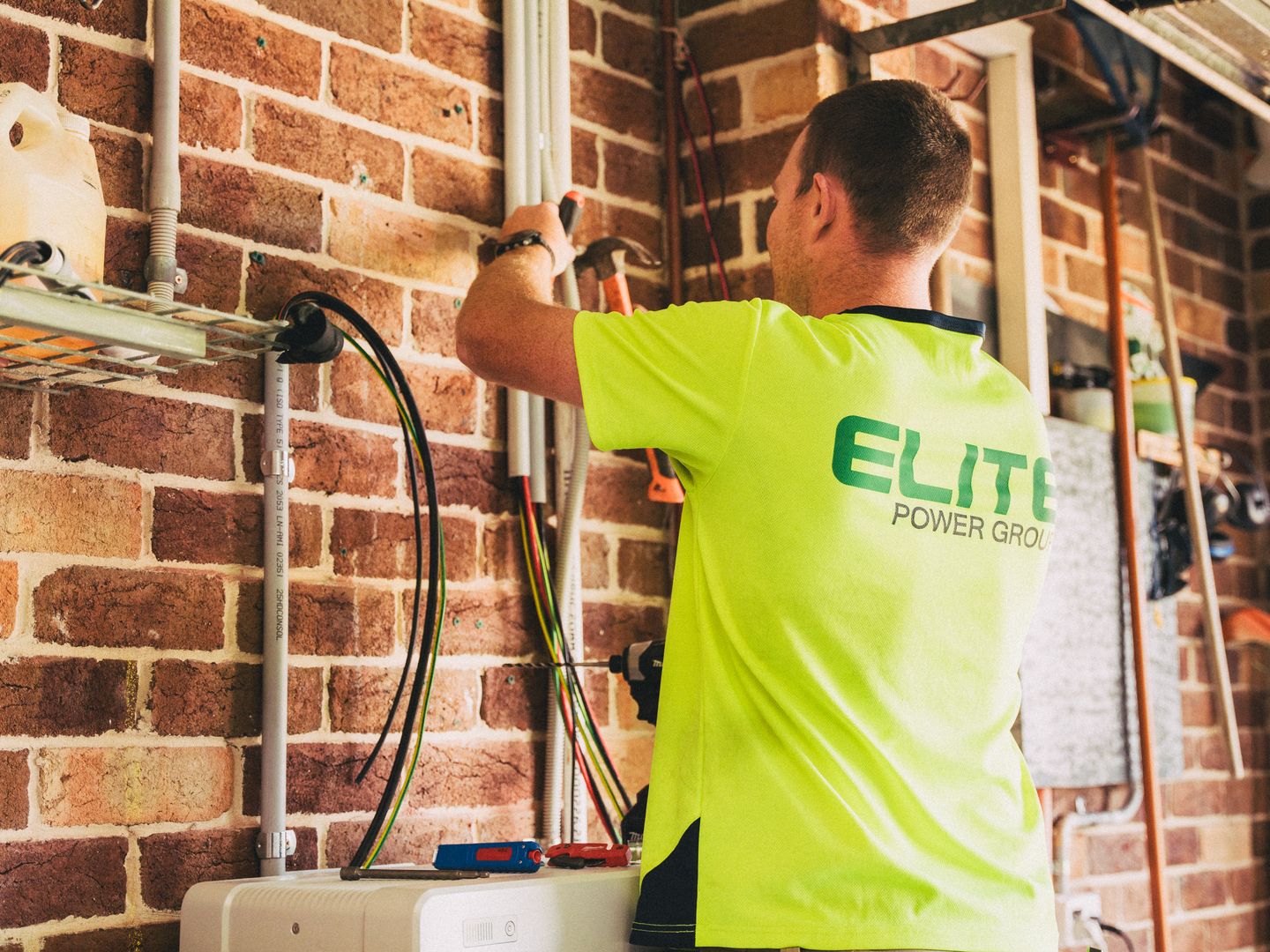
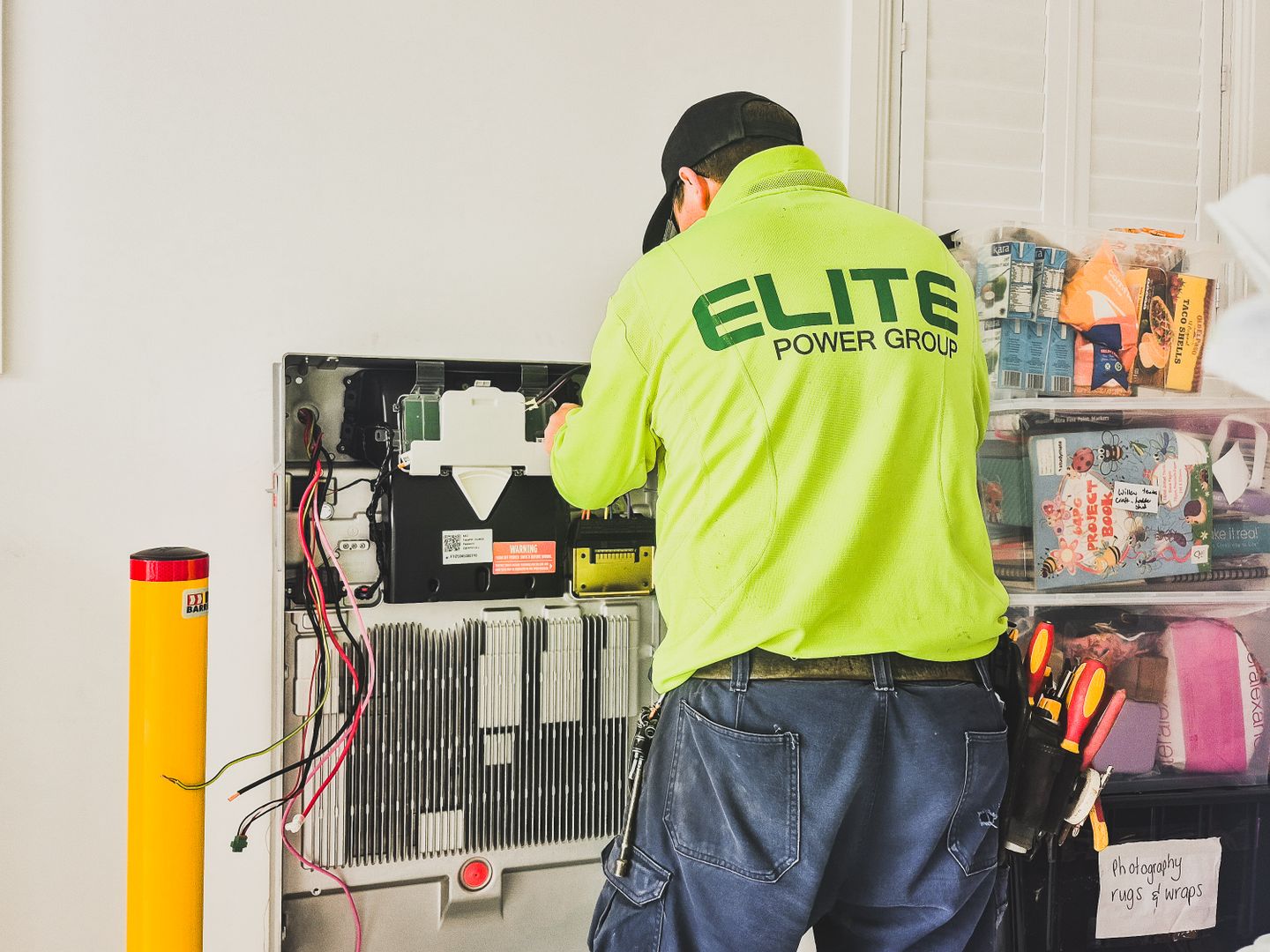
A technician from Elite Power Group installing a home battery system indoors in New South Wales, Australia.

The battery decision becomes much easier when you follow an ordered sizing process instead of shopping on brand names. A practical five-step path looks like this: first, define your backup goal—critical loads only versus whole-home comfort—and list the devices that must run. Second, measure or estimate those loads realistically, including surge loads such as well pumps, compressors, and some HVAC, and daily energy needed. Third, size for power first in kilowatts and then size for duration in kilowatt-hours, because a large kWh number is useless if the system can't start and carry the loads you care about. Fourth, choose the architecture that matches your existing solar—AC-coupled is often friendlier for retrofits; DC-coupled or hybrid can be cleaner for new builds, depending on equipment—and decide how you'll handle load shedding. Fifth, compare quotes with the same assumptions about what is backed up and how the system behaves during an outage, including whether your solar can continue producing when the grid is down.

Pros and Cons of Adding Battery Storage

Pros

  • Meaningful outage resilience without fuel storage
  • Ability to shift energy use under time-of-use pricing
  • Cleaner solar self-consumption instead of exporting at low value
  • Better control over your home's peak demand in some rate structures

Cons

  • High upfront cost
  • Performance depends heavily on design and commissioning, not just the battery brand
  • Added complexity in your electrical system

Fast Decision Framework

Two questions usually get you 80 percent of the way to the right battery choice

Narrow the Field Quickly

If you want a fast way to narrow the field, two questions usually get you 80 percent of the way there. First, what's your primary goal: maximum backup capability or modular, flexible expansion? If you want maximum backup capability with strong power delivery in a mainstream package, Powerwall 3 is often the starting point. If you want modular expansion that aligns with microinverter architecture and you're comfortable building in 5 kWh steps, the Enphase IQ Battery 5P tends to fit.

Second, what's your load profile: average home with a manageable critical-load list, or a high-demand home where you want to carry larger loads for longer? If your answer is high-demand—bigger HVAC, well pump, larger home, or frequent multi-hour outages—FranklinWH aPower 2 is often the better match because of its combination of 15 kWh capacity and 10 kW continuous output with a long warranty.

Stepping back, the pros and cons of adding storage are worth stating plainly before you sign anything. Pros: meaningful outage resilience without fuel storage; the ability to shift energy use under TOU pricing; cleaner solar self-consumption instead of exporting at low value; and better control over your home's peak demand in some rate structures. Cons: high upfront cost; performance depends heavily on design and commissioning, not just the battery brand; added complexity in your electrical system; and the reality that most homeowners won't see a fast payback unless outages are frequent, export compensation is low, or your rate plan strongly rewards load shifting.

The most financially confident approach in 2026 is to treat storage like a home infrastructure decision, not a gadget purchase. Start with what you need to keep running, then choose the smallest system that reliably does that job, and only then add capacity if the economics or your outage history justify it. For many homes, that means one high-power battery and disciplined load management beats two batteries installed without a clear plan.

One final note: tax rules, incentive programs, and electrical code requirements can change, and local inspectors and utilities can interpret requirements differently. Get your final design reviewed by a qualified installer and confirm any tax strategy with a tax professional, especially if you're dealing with 2025 expenditure timing or carryforward situations.

Find Your Ideal Battery

Answer two quick questions to see which battery system matches your home's needs

What is your primary goal for battery storage?
What is your home's load profile?

Explore All Battery Options

  • Tesla Powerwall 3

    Strong power delivery in a mainstream package with integrated solar inverter, ideal for maximum backup capability in average homes

  • Enphase IQ Battery 5P

    Modular expansion that aligns with microinverter architecture, building in 5 kWh steps for flexible growth

  • FranklinWH aPower 2

    Combines 15 kWh capacity and 10 kW continuous output with long warranty for high-demand homes requiring larger load support

Final Verdict

The best home battery in 2026 is the one that matches your home's electrical realities, your solar design, and your payback timeline. Tesla Powerwall 3 offers the strongest all-around package for most homeowners with its high power output and integrated inverter. FranklinWH aPower 2 excels for whole-home scalability and larger loads. Enphase IQ Battery 5P provides modular flexibility for microinverter systems. Choose based on your backup goals, load profile, and existing solar architecture rather than brand alone.

View Guides
Disclaimer This content is informational and not a substitute for professional electrical, tax, or legal advice. Tax rules, incentive programs, and electrical code requirements can change. Get your final design reviewed by a qualified installer and confirm any tax strategy with a tax professional.

Common Battery Mistakes to Avoid